
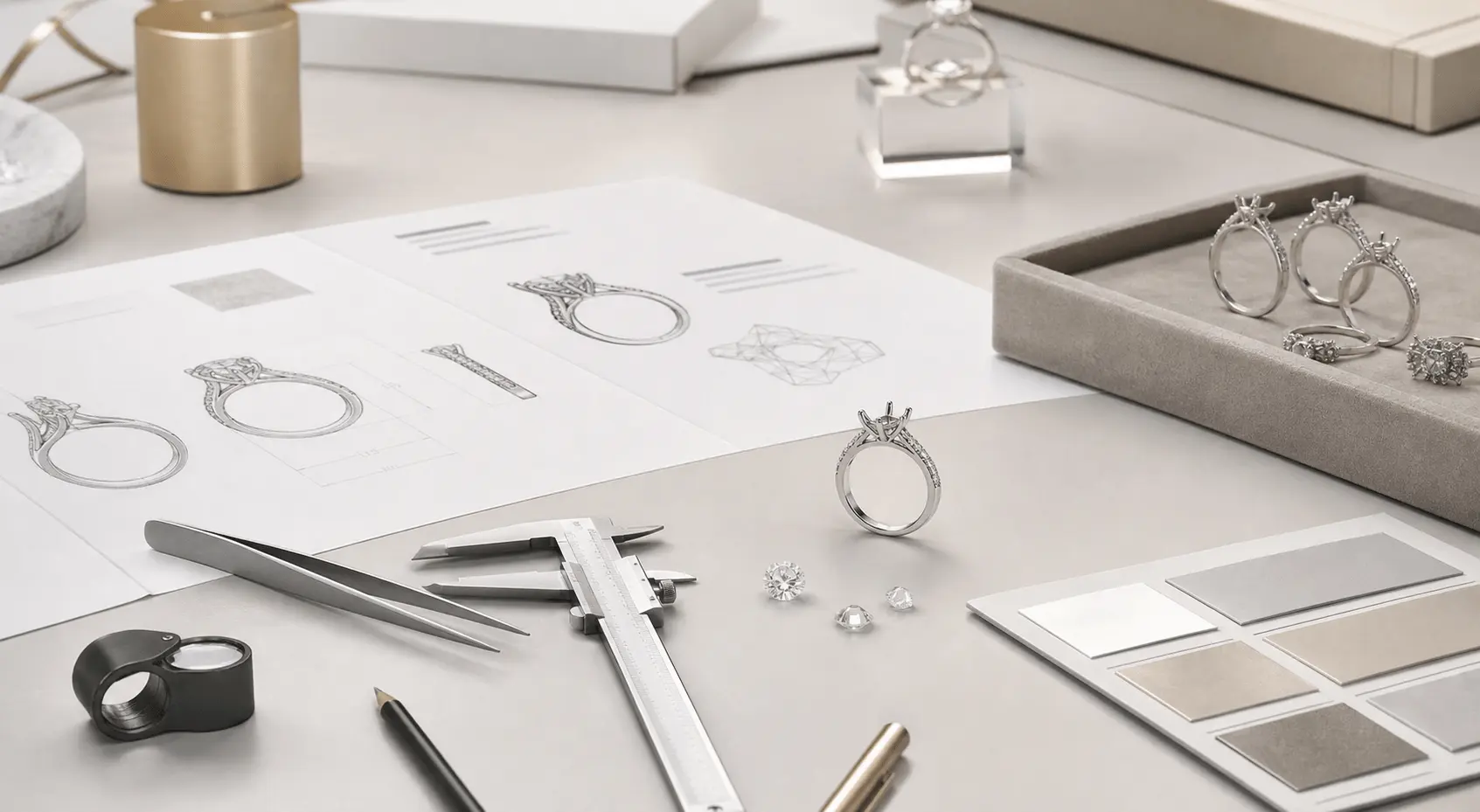
A good jewelry design still has to survive production
A jewelry design can look right on screen and still need work before it is ready for production.
That is something many growing jewelry brands learn quickly. A ring may look elegant in a render, but the prongs may need adjustment for stone security. A tennis bracelet may photograph beautifully, but the links still need to move well on the wrist. A pendant may seem simple until the chain, bail, stone size, metal weight, and finishing standard all have to work together at the same time.
This is where OEM jewelry manufacturing becomes more than “making the product.”
For selected Luminary Gem projects, SODALULU supports the production side of the process: reviewing specifications, coordinating lab-grown diamond sourcing, preparing samples, refining production details, and helping turn approved designs into jewelry that can be made consistently.
Luminary Gem is a consumer-facing fine jewelry brand. SODALULU is a B2B lab-grown diamond and custom jewelry manufacturing resource. The two roles are different, and that distinction matters. Luminary Gem owns the retail experience, the customer relationship, and the brand presentation. SODALULU works behind the scenes on production support.
From brand idea to production brief
A custom jewelry project does not begin with casting or setting. It begins with a brief.
For a brand like Luminary Gem, the brief has to connect the design idea with the customer experience. A product is not just a ring or bracelet. It has a retail price point, a target buyer, a photography style, a metal choice, a stone specification, a packaging expectation, and a delivery promise.
Before production begins, SODALULU helps clarify details such as metal type, gold color, stone shape, diamond size, setting structure, finish, ring size range, bracelet length, packaging needs, and expected order quantity.
These details sound small until they are missing.
“Make the band delicate” is not enough for production. Does that mean a thinner band, lower profile, smaller prongs, less metal around the side stones, or a different polishing finish? “Use high-quality stones” also needs translation. Does the brand need IGI certified center stones, matched melee, a specific color range, a clarity range, or a tolerance for stone measurements?
A good brief turns taste into specifications.
Why repeatability matters for a DTC jewelry brand
DTC jewelry brands live very close to their customers.
A customer sees close-up photography, reads the product description, checks the diamond details, places an order online, and receives the finished piece directly. There is less room for vague explanations. The product has to match the promise.
That makes repeatability important.
If Luminary Gem approves a sample, the next production run should stay aligned with that standard. The prongs should not suddenly look heavier. The band should not feel thinner than expected. The stone layout should not drift. The finishing should not change from one batch to the next without a reason.
In OEM production, repeatability depends on documentation: CAD files, sample notes, stone maps, bill of materials, finish references, measurements, and inspection standards. These are not glamorous parts of jewelry, but they are what keep a collection stable as orders continue.
SODALULU’s role is to help brands move from “this sample looks good” to “this product can be produced again with controlled expectations.”
Lab-grown diamond sourcing is not just a price question
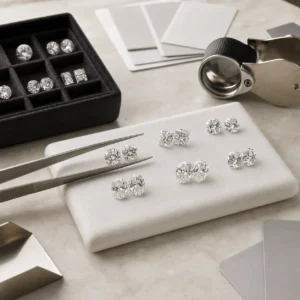
Lab-grown diamonds give jewelry brands more flexibility, especially in engagement rings, tennis bracelets, earrings, pendants, and custom designs. But sourcing still requires discipline.
A solitaire ring may need one certified center stone with a specific shape and measurement range. A tennis bracelet may require dozens of stones that look consistent together. Earrings need matching stones so the pair feels balanced. A necklace may need stones that sit cleanly in the setting and perform well under product photography.
For SODALULU, lab-grown diamond sourcing means looking beyond the headline carat weight.
The team may review stone shape, size, color, clarity, measurement tolerance, availability, grading report needs, laser inscription matching when applicable, and repeat-order planning. A specification that is easy to source for one sample may be harder to repeat across a larger batch. That needs to be understood early, not after a launch date is already fixed.
This is especially relevant for consumer brands. Customers may not see the sourcing conversation, but they feel the result when stones are well matched and the finished jewelry looks consistent.
OEM and ODM: two different starting points
Not every project starts the same way.
In an OEM project, the client usually brings the design direction, reference images, CAD files, or technical requirements. SODALULU’s role is to help develop that concept into manufacturable jewelry, then support sampling and production according to the approved specifications.
In an ODM project, SODALULU may provide an existing or adaptable design direction that the client customizes. The brand may adjust metal color, stone size, diamond shape, setting details, packaging, or branding elements.
For Luminary Gem, the important point is that its consumer-facing design language remains distinct. SODALULU can support development and production, but Luminary Gem’s brand presentation belongs to Luminary Gem.
For other jewelry businesses, the choice between OEM and ODM depends on how much design work has already been completed and how much development support is needed.
Sampling is where vague ideas become measurable
Sampling is one of the most important stages in custom jewelry manufacturing.
It is also where many problems can be caught before they become expensive.
A sample allows the brand and manufacturer to review proportion, comfort, stone fit, setting security, polish, metal color, clasp function, weight, packaging fit, and overall appearance. If revisions are needed, they should be recorded clearly. A comment like “make it more premium” is not enough. The team needs to know whether the issue is surface finish, prong shape, stone matching, metal thickness, or packaging presentation.
Once a sample is approved, it becomes the reference point for production.
For selected Luminary Gem projects, this means the approved sample is not treated as a one-off piece. It becomes part of the production standard: something future orders can be compared against.
That is where a manufacturing partner adds value. Not by saying yes to every idea, but by helping define what can be produced reliably.
Quality control should start before final inspection
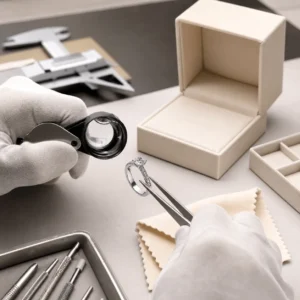
Final inspection matters, but it should not be the first time quality is discussed.
In jewelry manufacturing, quality is built through checkpoints. Stones need to be checked. Components need to be reviewed. Settings need to be secure. Metal finish needs to be consistent. Functional parts such as clasps, posts, hinges, and links need to work properly. Packaging and order details also need to match the client’s requirements.
Depending on the project, SODALULU may review:
- Stone count, size, and matching
- Metal type and finished weight
- Ring size or bracelet length
- Prong alignment and stone security
- Surface finish and polishing quality
- Clasp, post, hinge, or moving-part function
- Logo, hallmark, or fineness mark position where applicable
- Packaging, SKU, barcode, and quantity accuracy
No responsible manufacturer should promise zero defects. Jewelry involves materials, handwork, finishing, and small tolerances. The better question is whether the inspection standard is clear and whether issues are handled before the goods leave production.
For B2B buyers, “strict QC” is not enough as a phrase. The useful question is: what is checked, when is it checked, and against which approved standard?
Certification, testing, and compliance need precise language
Jewelry buyers often use the word “certified” too broadly.
A diamond grading report is not the same as a finished product certification. A lab-grown diamond report may document stone identity, measurements, and quality characteristics. Metal verification is a separate matter. Product safety testing is also separate and depends on the destination market.
For overseas brands, this distinction matters.
If a buyer is selling in the United States, lab-grown diamond disclosure needs to be clear and not misleading. If a buyer is selling in the United Kingdom or Europe, precious-metal hallmarking, nickel release, lead, cadmium, labeling, and general product safety requirements may need to be considered depending on the product and market.
SODALULU can support documentation and testing coordination according to agreed order requirements, but brands should confirm destination-market obligations with their own compliance advisers when needed.
A careful manufacturing process does not replace legal responsibility in the buyer’s market. It supports it.
MOQ and lead time depend on the project
Many buyers ask for MOQ first. It is a fair question, but the answer depends on the product.
A simple existing design with shared components may have a different MOQ from a new custom ring requiring CAD development, mold work, unusual stone sizes, custom logo placement, special packaging, or third-party testing. Multiple ring sizes, metal colors, and stone variations can also change production planning.
The same applies to lead time.
A timeline depends on design complexity, sample approval speed, material availability, stone sourcing, production quantity, finishing requirements, inspection, packaging, and shipping method. Design changes after CAD approval or sample approval can affect both cost and delivery.
For that reason, SODALULU usually treats quotation, MOQ, and lead time as part of the project review—not as one-size-fits-all numbers.
This is not less convenient. It is more honest.
Communication is part of the product
In cross-border jewelry manufacturing, communication can be just as important as production equipment.
A buyer needs to know which design version is approved, which stone specification is being used, what changed after sampling, when production begins, and what happens if a material or schedule issue appears.
Good communication reduces risk.
For SODALULU, that means documenting key approvals, keeping specifications clear, confirming changes before irreversible work, and helping the client understand the trade-offs between design, cost, quantity, and lead time.
For Luminary Gem, this production communication supports a cleaner retail experience. The customer does not need to see the full manufacturing process, but the quality of that process affects what the customer receives.
Packaging and shipment are not afterthoughts
Jewelry production does not end when the piece is polished.
For brand-ready delivery, packaging, labeling, carton protection, order accuracy, and shipping documents need to be considered. A DTC brand may need packaging that supports its customer experience. A retailer may need barcodes or SKU labels. A wholesaler may need carton-level organization. An overseas buyer may need commercial invoices, packing lists, and clear shipping terms.
Shipping also needs realistic planning.
Production lead time and transit time are not the same thing. Customs clearance, duties, taxes, insurance responsibility, and import requirements depend on the destination country and agreed shipping terms.
SODALULU can support export preparation and shipment coordination, but buyers should confirm local customs and tax responsibilities in their own market.
This is another place where professional manufacturing support becomes practical, not decorative.
What this means for other jewelry brands
The SODALULU and Luminary Gem relationship shows a larger point.
A growing jewelry brand does not only need someone to make a piece of jewelry. It needs a production process that can support brand consistency, product development, customer expectations, and repeat orders.
That includes:
- Clear specifications
- Realistic sampling
- Lab-grown diamond sourcing
- Production feasibility review
- Quality checkpoints
- Packaging coordination
- Documentation support
- Communication when trade-offs appear
For overseas jewelry businesses, the right OEM resource is not simply the supplier with the lowest quotation. A low price is not helpful if the sample cannot be repeated, if the stones do not match, if finishing changes between batches, or if important details are not documented.
The better question is whether the supplier can help reduce uncertainty.
SODALULU’s role behind the scenes
Luminary Gem remains the consumer-facing fine jewelry brand. Its customers interact with the product, the story, the photography, the website, and the buying experience.
SODALULU works on the production side for selected projects. Its role is to help translate design intent into production requirements, coordinate materials, support sampling, review manufacturing feasibility, and manage agreed quality checkpoints.
That separation keeps both brands clear.
Luminary Gem presents jewelry to consumers. SODALULU supports jewelry businesses with OEM and custom manufacturing capabilities.
For business buyers, that is the real message: SODALULU is not trying to sound like a retail jewelry brand. It is built to support the production work that retail brands, designers, wholesalers, and e-commerce sellers need behind the scenes.
Discuss your custom jewelry project with SODALULU
If you are developing a lab-grown diamond jewelry collection, the most useful first step is not a vague request for a price list.
Send the design reference, target metal, stone requirements, expected quantity, packaging needs, market destination, and launch timeline. If you already have CAD files, samples, or product photos, include them. If the design is still early, explain the commercial goal and the customer you are trying to serve.
SODALULU can then review the project more practically: what needs to be developed, what can be sourced, what should be sampled, which specifications affect cost, and what production timeline is realistic.
OEM jewelry manufacturing works best when both sides are clear before production begins.
FAQ
Is SODALULU the same as Luminary Gem?
No. SODALULU is a B2B lab-grown diamond and custom jewelry manufacturing resource. Luminary Gem is a consumer-facing fine jewelry brand.
Does SODALULU make all Luminary Gem products?
This article does not claim that all Luminary Gem products are made by SODALULU. SODALULU provides manufacturing support for selected development and production processes.
What does SODALULU support for Luminary Gem?
Depending on the project, SODALULU may support lab-grown diamond sourcing, sample development, production coordination, quality checks, packaging preparation, and order communication.
What is the difference between OEM and ODM jewelry manufacturing?
OEM usually starts with the client’s design or technical brief. ODM starts from an existing or adaptable design direction that the client customizes through stones, metal, finish, branding, or packaging.
Can SODALULU help with lab-grown diamond sourcing?
Yes. SODALULU can support lab-grown diamond sourcing according to agreed specifications such as shape, size, color, clarity, matching requirements, and report needs.
What should a brand prepare before contacting SODALULU?
Prepare design references, target materials, diamond specifications, expected quantity, packaging needs, destination market, and launch timeline if available.